

Of the 4 clutches observed, only one chick was born!
Some egg-laying took place under the eye of cameras placed in the nests. This makes it possible to document the causes of hatching failures.
Last year, a Great Raven took advantage of a moment when the nest was unsupervised by the Bearded Vultures to break an egg (an excellent source of protein); this year, the causes of failure are different.
In one case, the young male refused to incubate the egg, even though both males and females normally incubate eggs. The egg therefore remained unbrooded for too long in very cold weather. The repeated thermal shocks prevented the development of a possible embryo.
In the case of another pair, both eggs failed to hatch, but the cause is not yet known.
In another nest, a few days before hatching, the egg was broken under the female when she got up. There was no chick in this egg.
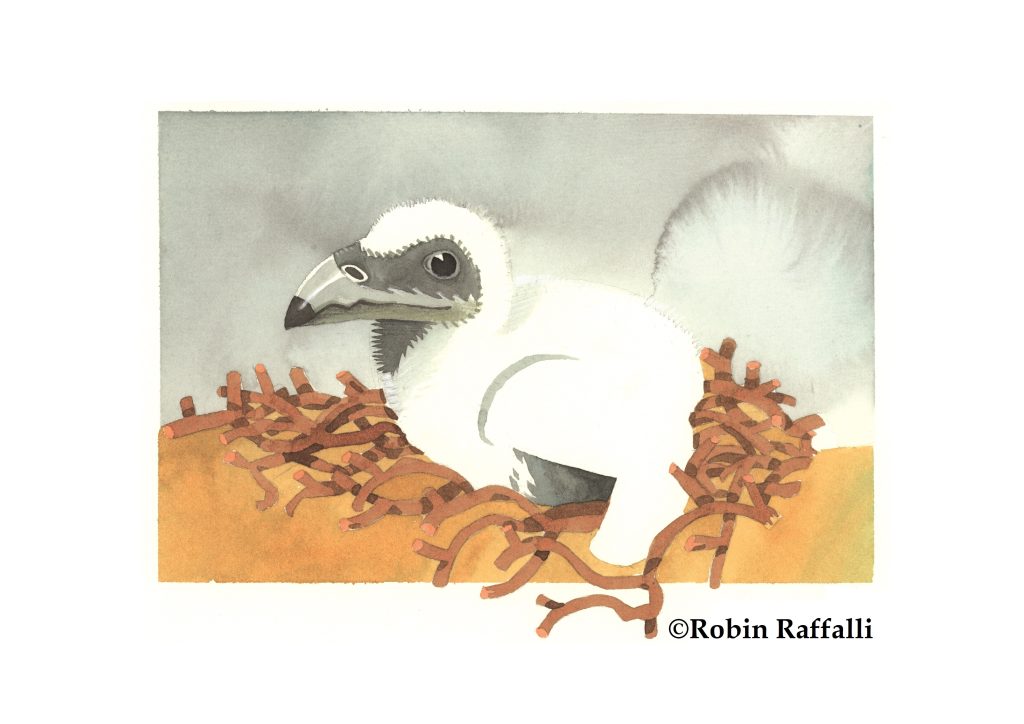
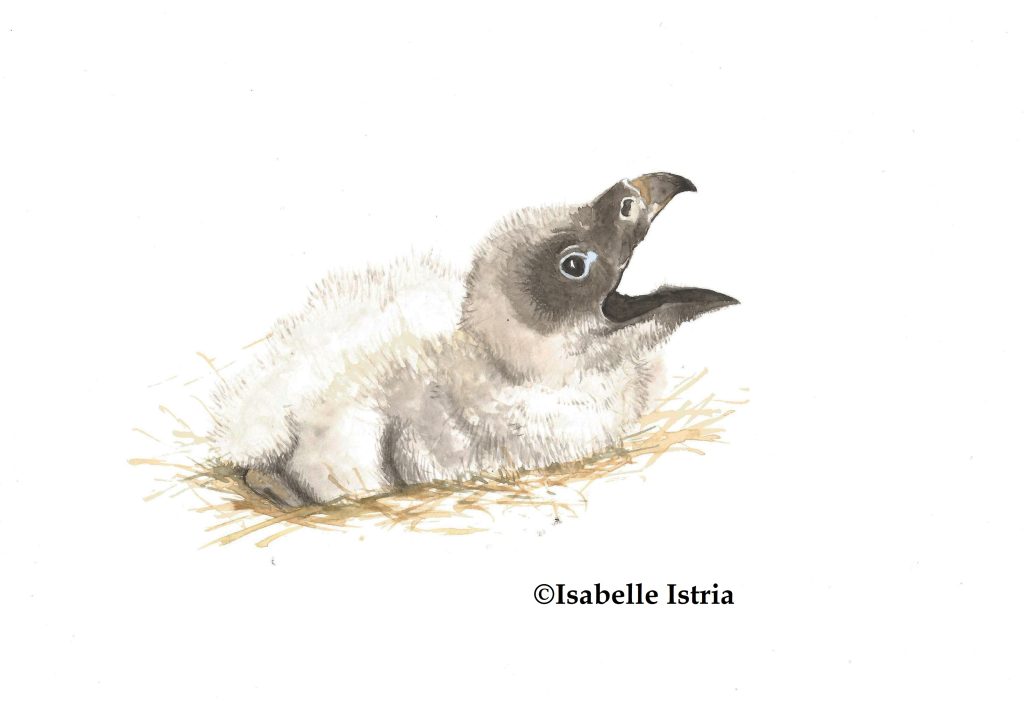
... But one couple is currently raising a chick in their nest! It is just over a month old. This bearded vulture, a source of hope, is not due to leave its nest until July!
During this period of uncertainty and risk until the young bearded vulture fledged, artificial feeding was intensified to prevent the members of the pair from being absent from the nest for too long in search of food, both for themselves and to feed the young bearded vulture... Feeding plays an essential role during this phase. The bearded vulture, which weighs 150g and measures around ten centimetres at birth, will reach adult size in just 4 months, with a weight of between 5 and 6 kg and a wingspan of around 2.80 m!
illustrations : Robin Raffalli & Isabelle Istria